ECB study, 2023
Expanding the main site – is that possible?
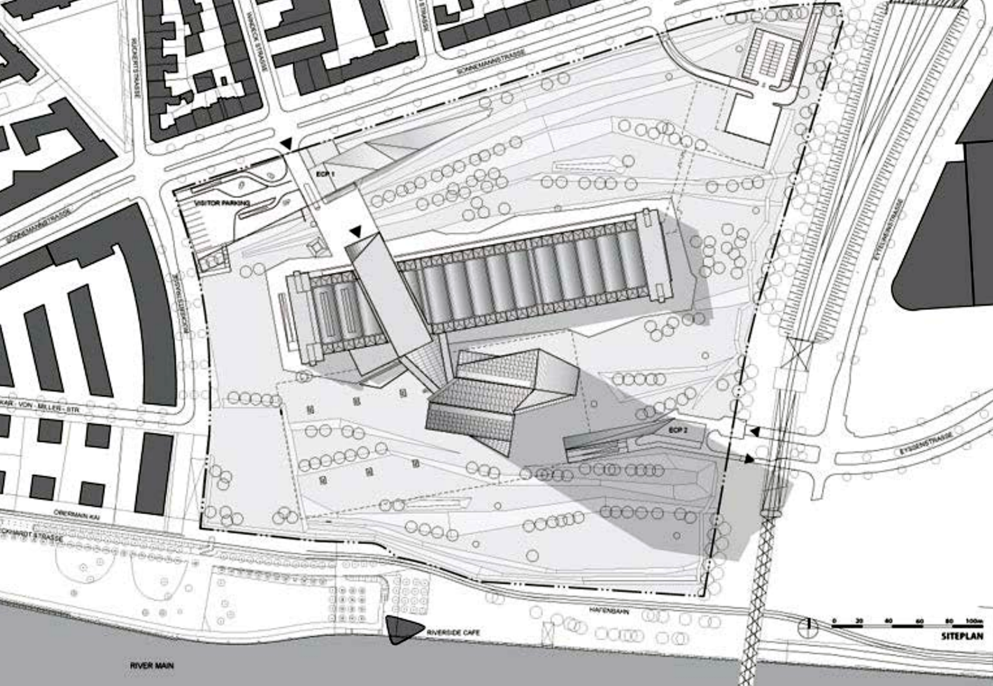
In spring 2002, the ECB purchased the former Großmarkthalle and the associated land from the City of Frankfurt am Main with a view to constructing its new headquarters in the east of the city. It was at this point that EU citizens held the new currency in their hands for the first time. The building was therefore intended to reflect the ECB’s growing importance and its wide-ranging responsibilities in every respect, including aesthetically.
Following several stages of the competition, the ECB opted three years later for the aesthetically and structurally ambitious design by COOP HIMMELB(L)AU (Vienna). Full planning permission for the building plans was granted in 2008; the foundation stone was laid two years later, and a further four years on, in November 2014, the first staff members moved into their new offices.
The result is a success. The European Central Bank’s unique position is clearly based not only on its distance from the Frankfurt towers of the commercial banks, but also on the innovative presence of the seemingly curved glass surfaces of the two high-rise facades, which rise to a height of 185 metres.
Even at the time, various competition entrants had explicitly designed their proposals to allow for the addition of further high-rise buildings at a later date. The two wings of the completed design, which are joined by an atrium to form a single large structure, also leave room in principle for a further high-rise building.
After four years of close collaboration with the ECB, we were quite familiar with the ECB’s other locations within the Frankfurt city area. As a result, it became clear to us in 2022/23 that, sooner or later, the logical next step for the ECB might be to construct another large building alongside its headquarters.
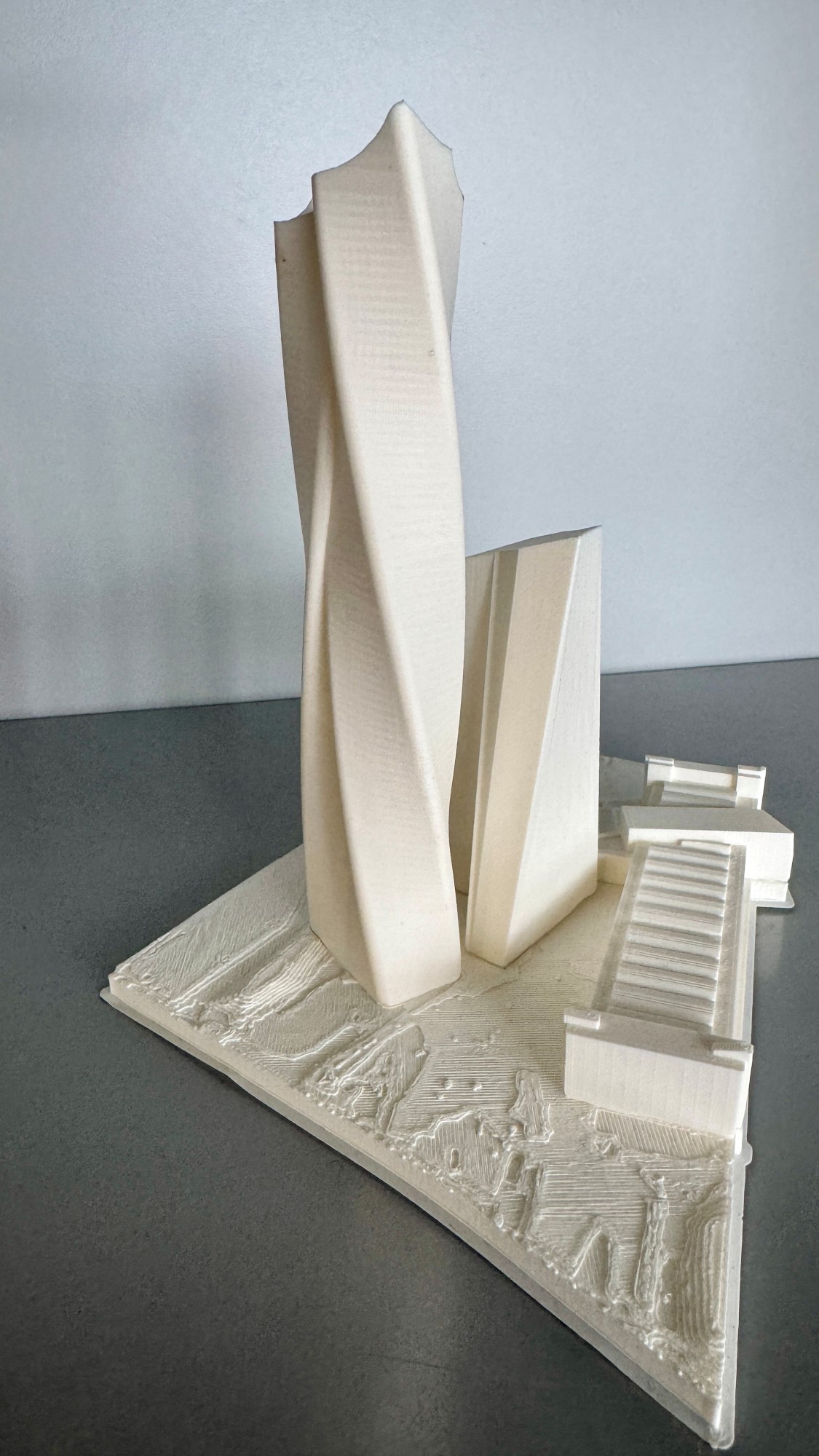
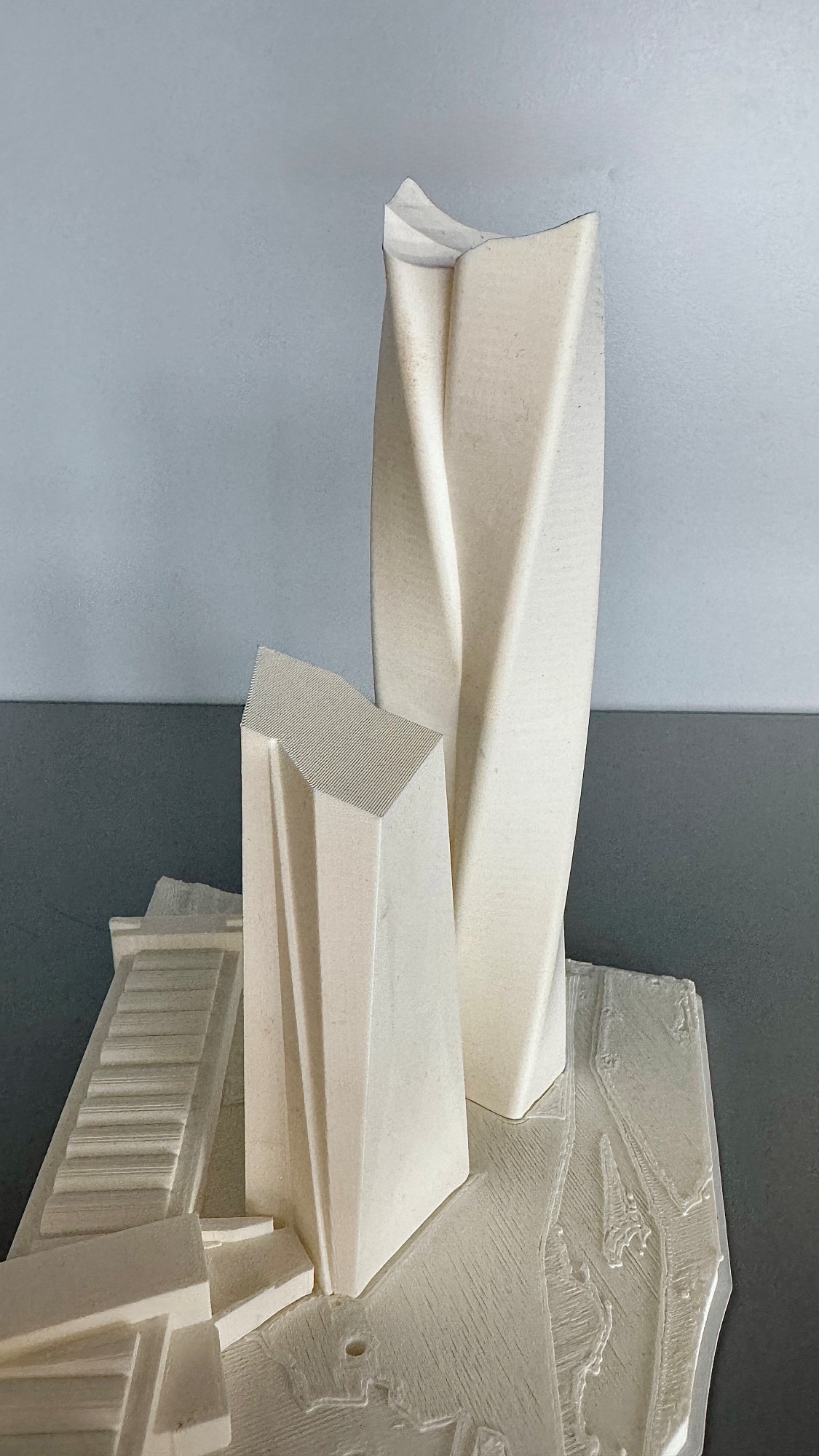
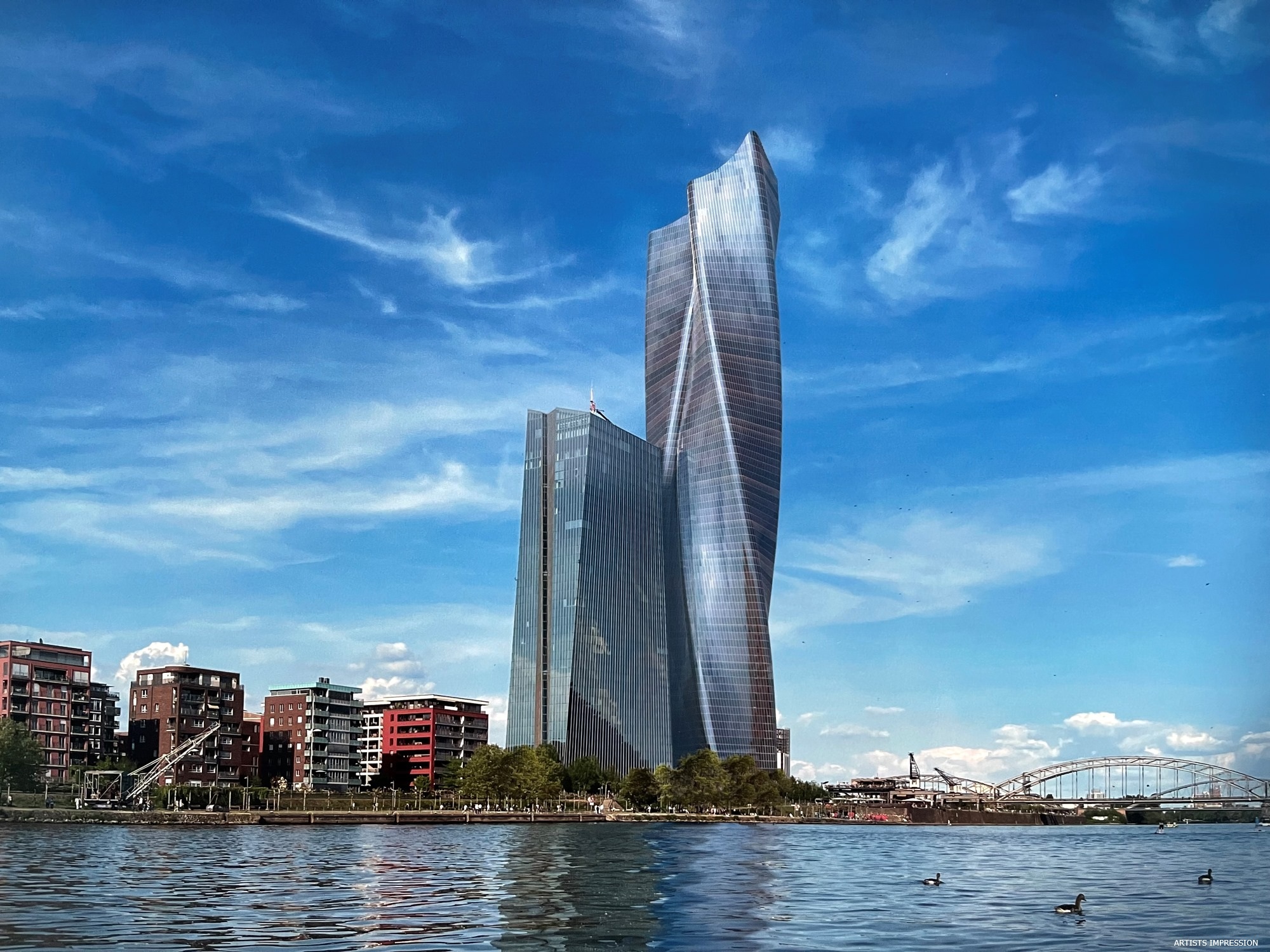
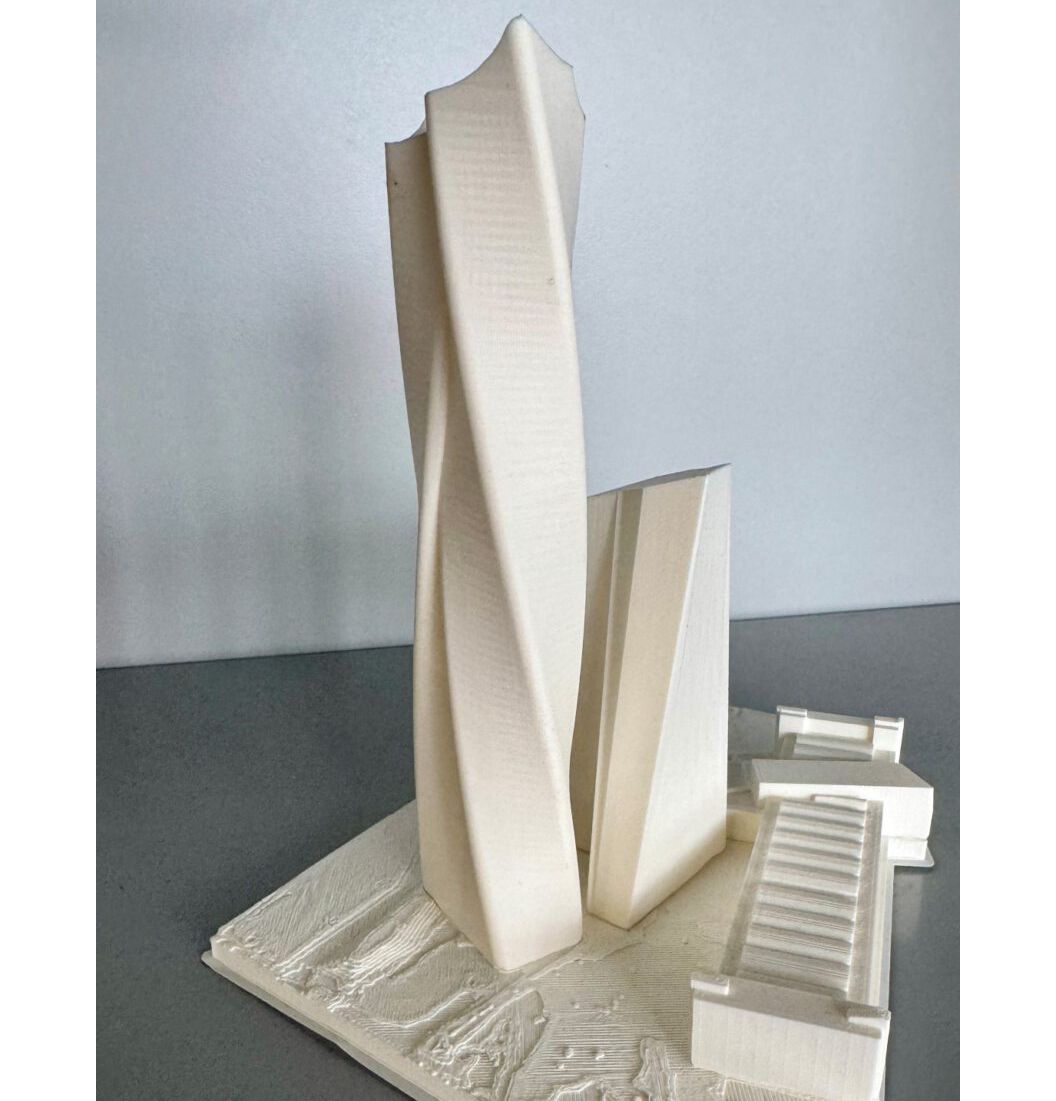
For this reason, we explored internally (without a commission) how the extension of the ECB headquarters could be designed so that the existing solitary building and the new extension would blend to create a new overall effect, thus reinforcing the existing large-scale form in its visual impact from a distance, creating an emblem for the eurozone’s growing self-confidence and the global significance of its currency.
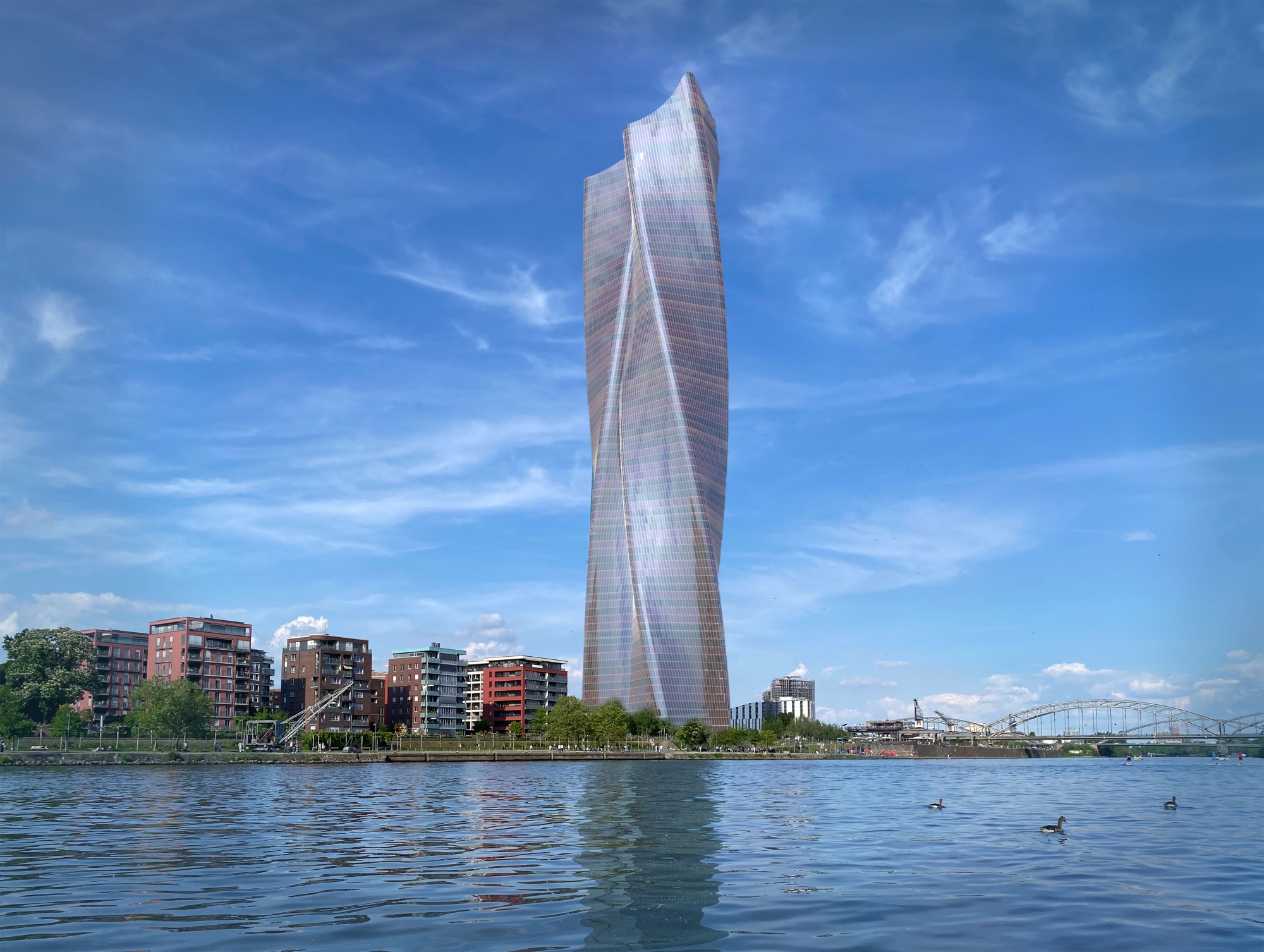
Our design proposal for an extension to the ECB builds on the concepts of the HIMELB(L)AU building: once again, twin towers, a dynamically twisted façade, and different heights for the two sections, creating an integrated spire. Yet there is no sense of duplication or a jarring annexe. The two buildings complement one another like closely bonded siblings.
In our vision, the extension reaches a height of 400 metres. This would make the ECB by far the tallest building in the EU and Western Europe.
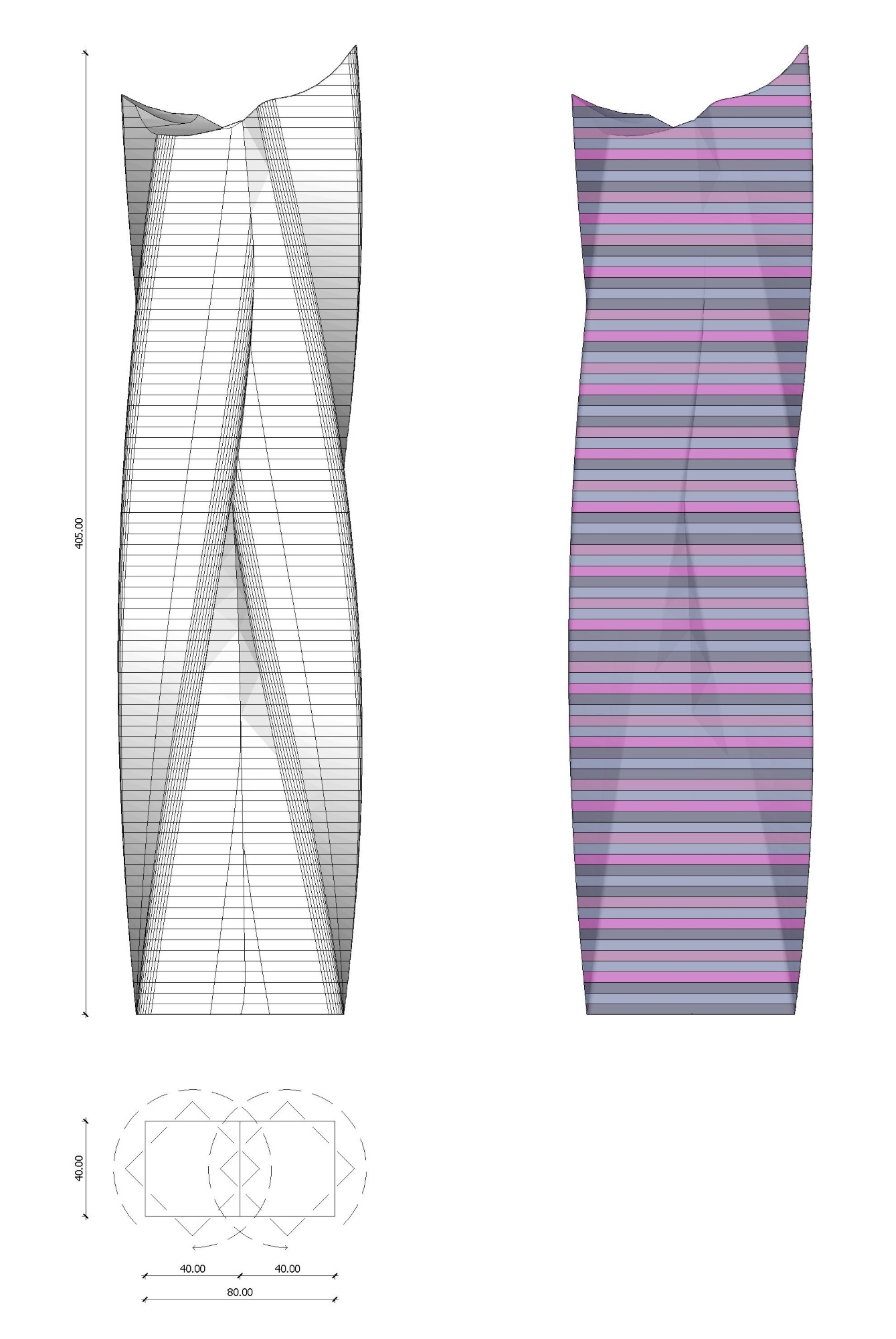
At the same time, we were exploring the aesthetic possibilities of Guardian SunGuard glazing. It has several distinctive features. Firstly, it is available in a range of colours; secondly, it has a dazzling silvery reflectivity; and thirdly, it can significantly reduce air-conditioning costs.
In our vision, the various colours could be used to create a horizontal striped pattern on the façade at no extra cost, which in turn would emphasise the dynamic twist.
During the four years of our close collaboration with the ECB, we have always found the central bank to be clear-minded, determined and persistent. Nevertheless, the new headquarters covered a period of around 17 years between the identification of the need and the final handover of the building.
Our vision, part of which we are presenting here, dates from 2023. Seventeen years on, we are already in 2040. We are always mindful of such timeframes. Today, more than ever before, we need to look as far into the future as possible. And that increasingly means looking ahead from a technical perspective.
What is particularly noteworthy about this façade design, therefore, is what lies behind it: a building that is extremely efficient both environmentally and technically, and which could potentially reduce electricity consumption per workstation by around a third compared to the existing building.
Project Gallery