Ideas Competition Karstadt Celle
Revitalizing Structure and Space for New Uses
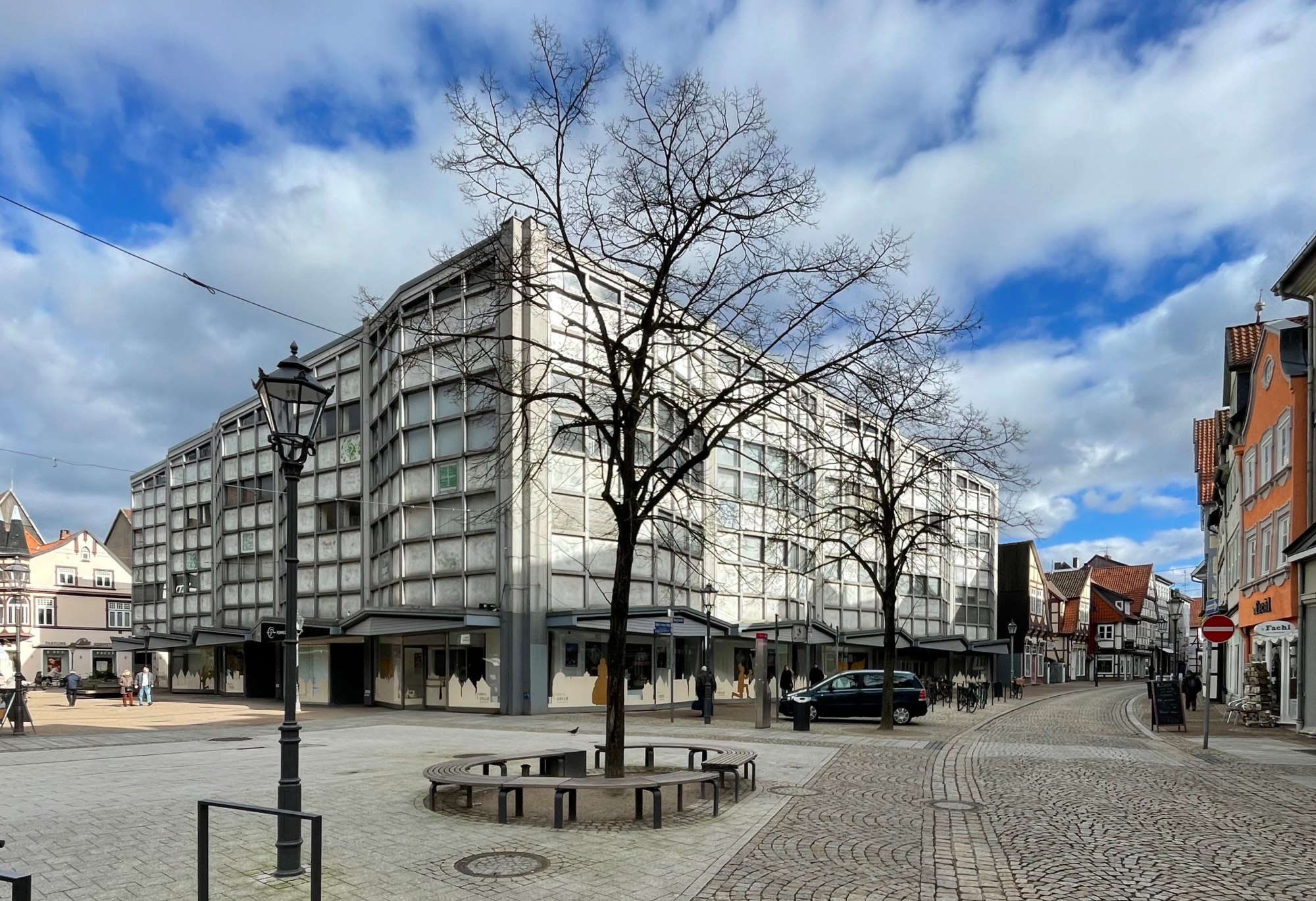
Around 60 years ago, the Karstadt building at Robert-Meyer-Platz in Celle was constructed right in the heart of the historic old town, which features over 400 listed half-timbered houses. For years, there have been persistent demands to demolish this aesthetically problematic structure.
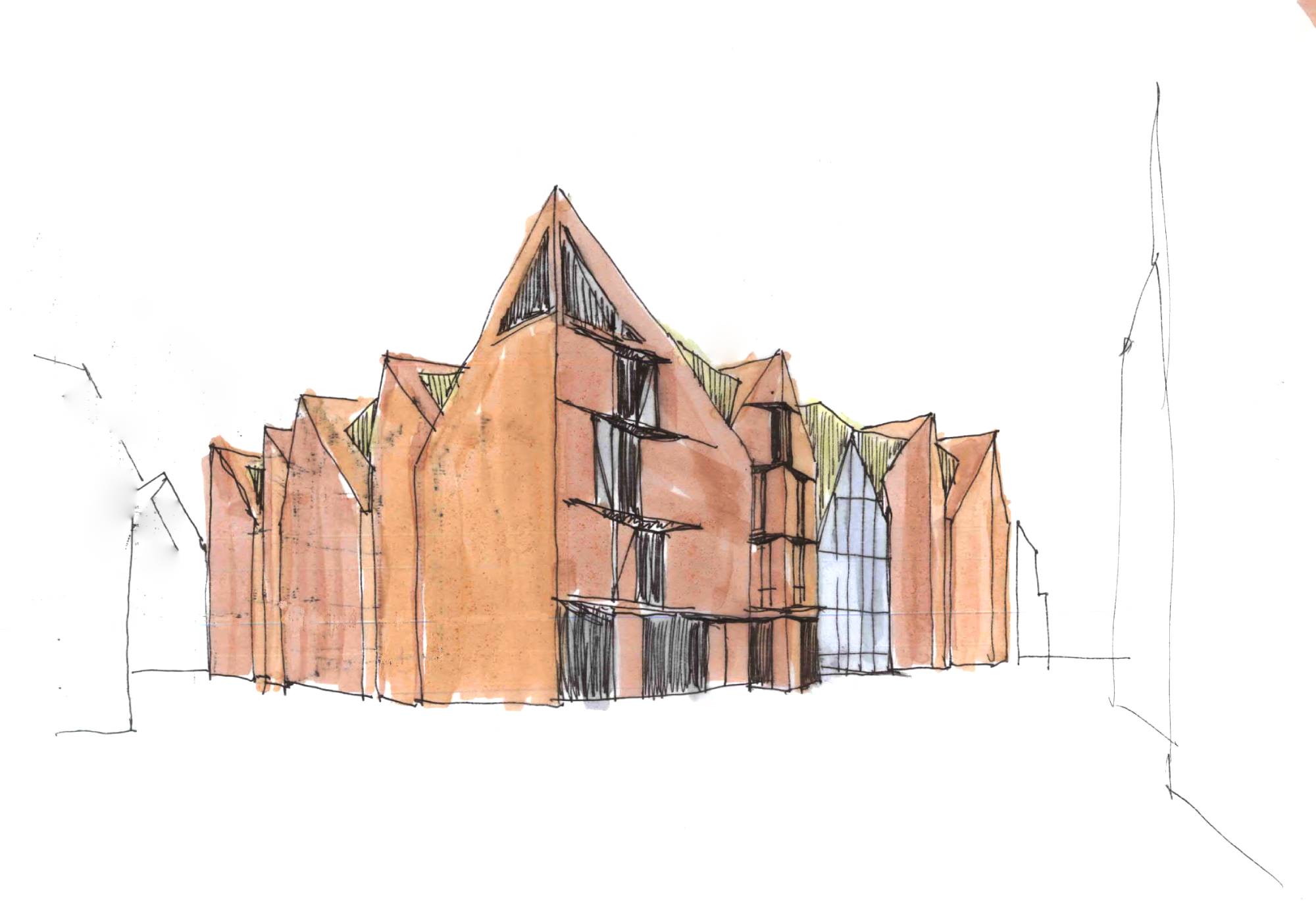
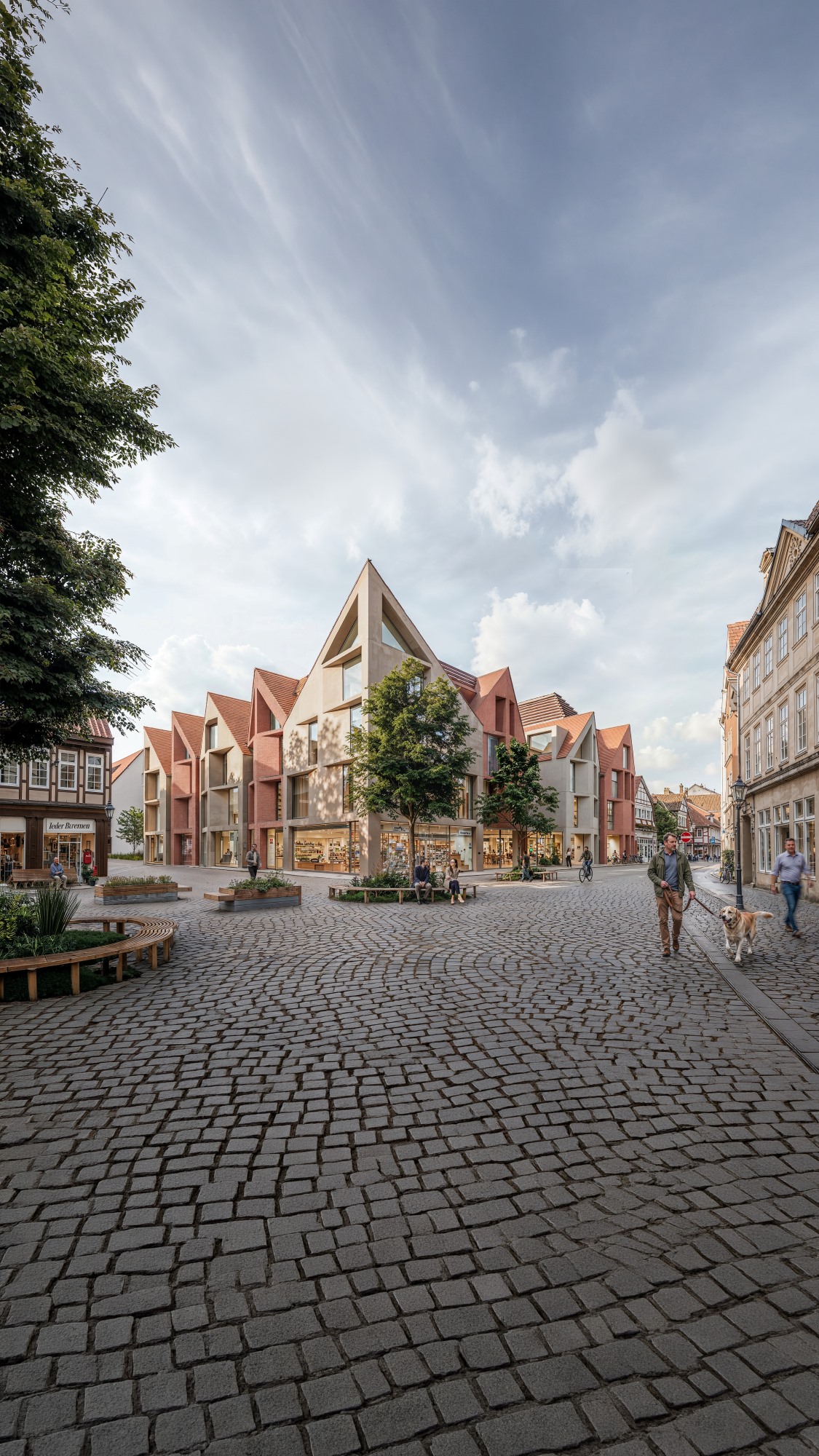
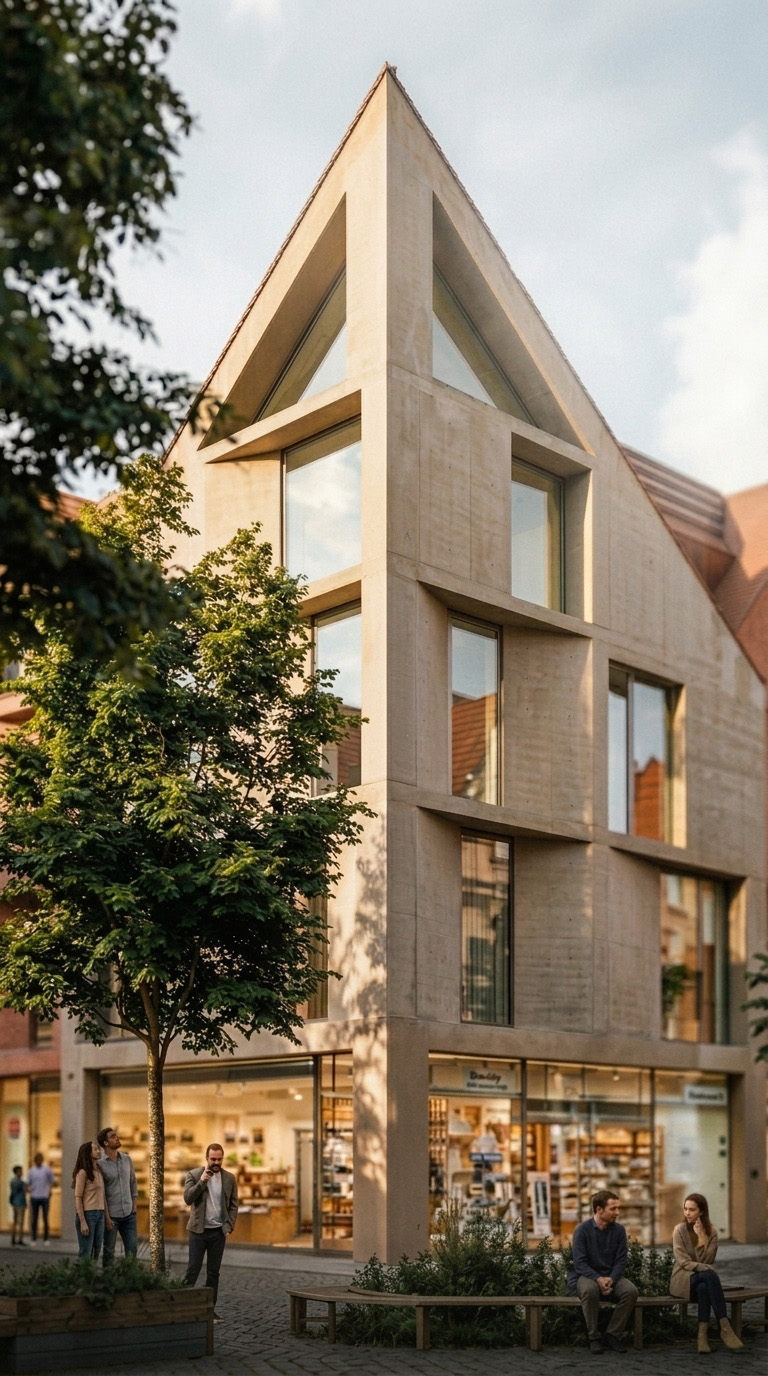
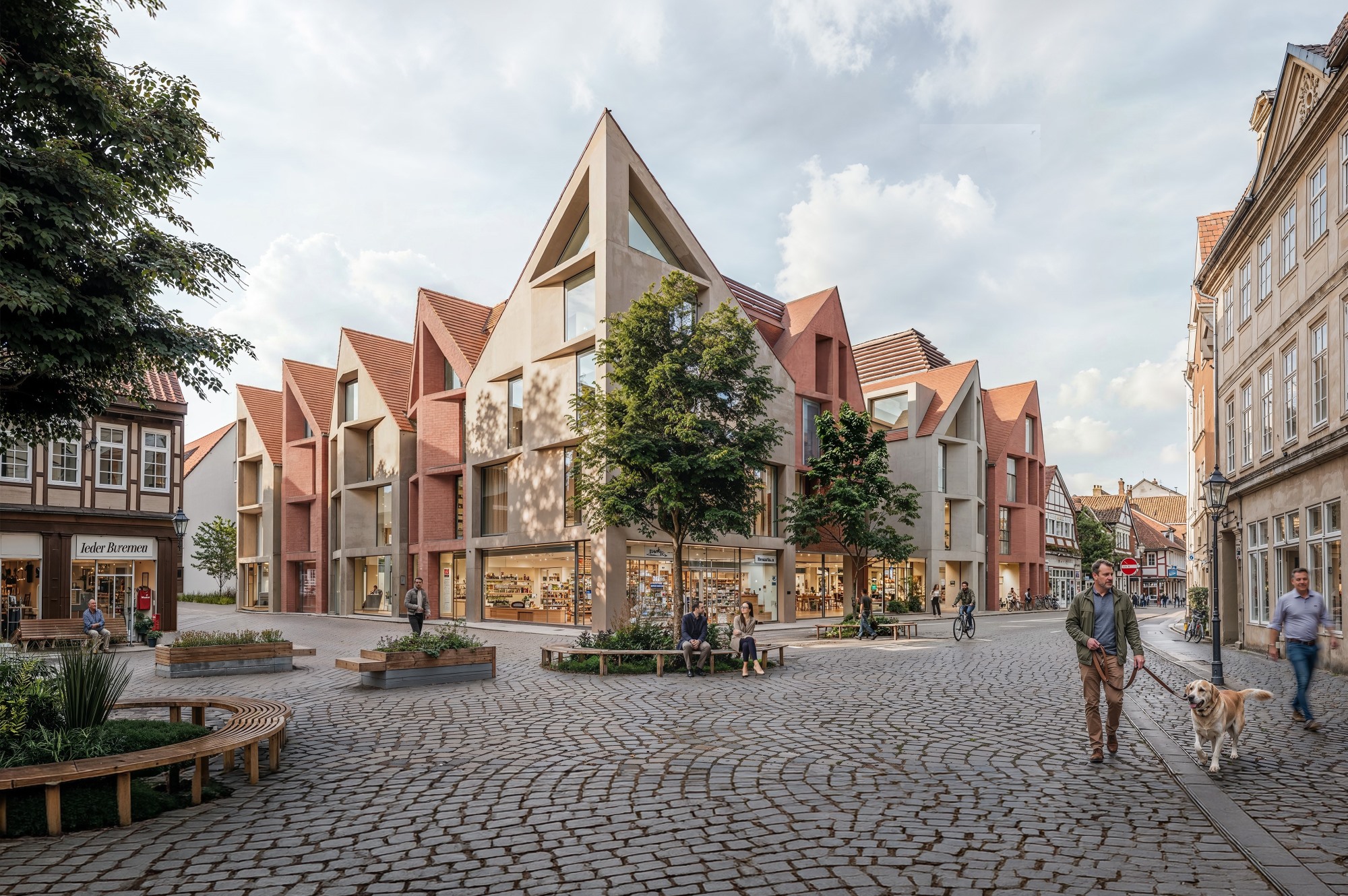
In an open competition, we are developing an opportunity to preserve the existing building fabric while transforming its character in a way that upgrades and beautifies the area to suit the historic old town—without relying on nostalgic clichés. The goal is to strengthen Celle’s city center through a contemporary mix of uses and a new “attractiveness building block” (Lord Mayor J. Nigge).
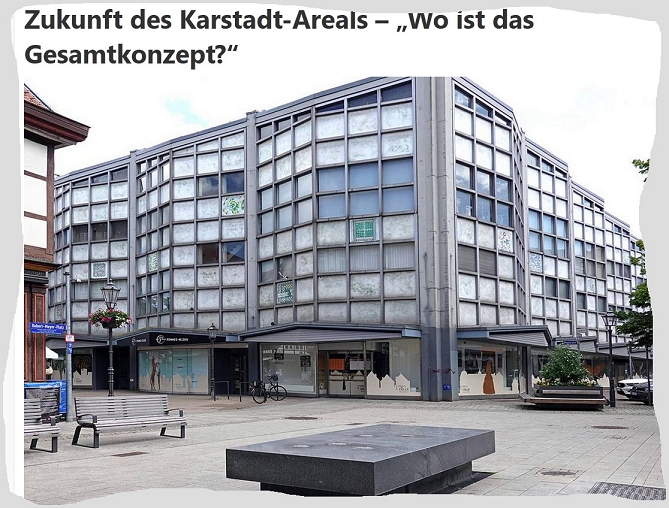 It has remained unchanged for years. The original building was considered exemplary in its day (architect: Walter Brune). The main problem today is the decline of its original use as a department store. (The image shows an article in Celler Presse online, 31 May 2026)
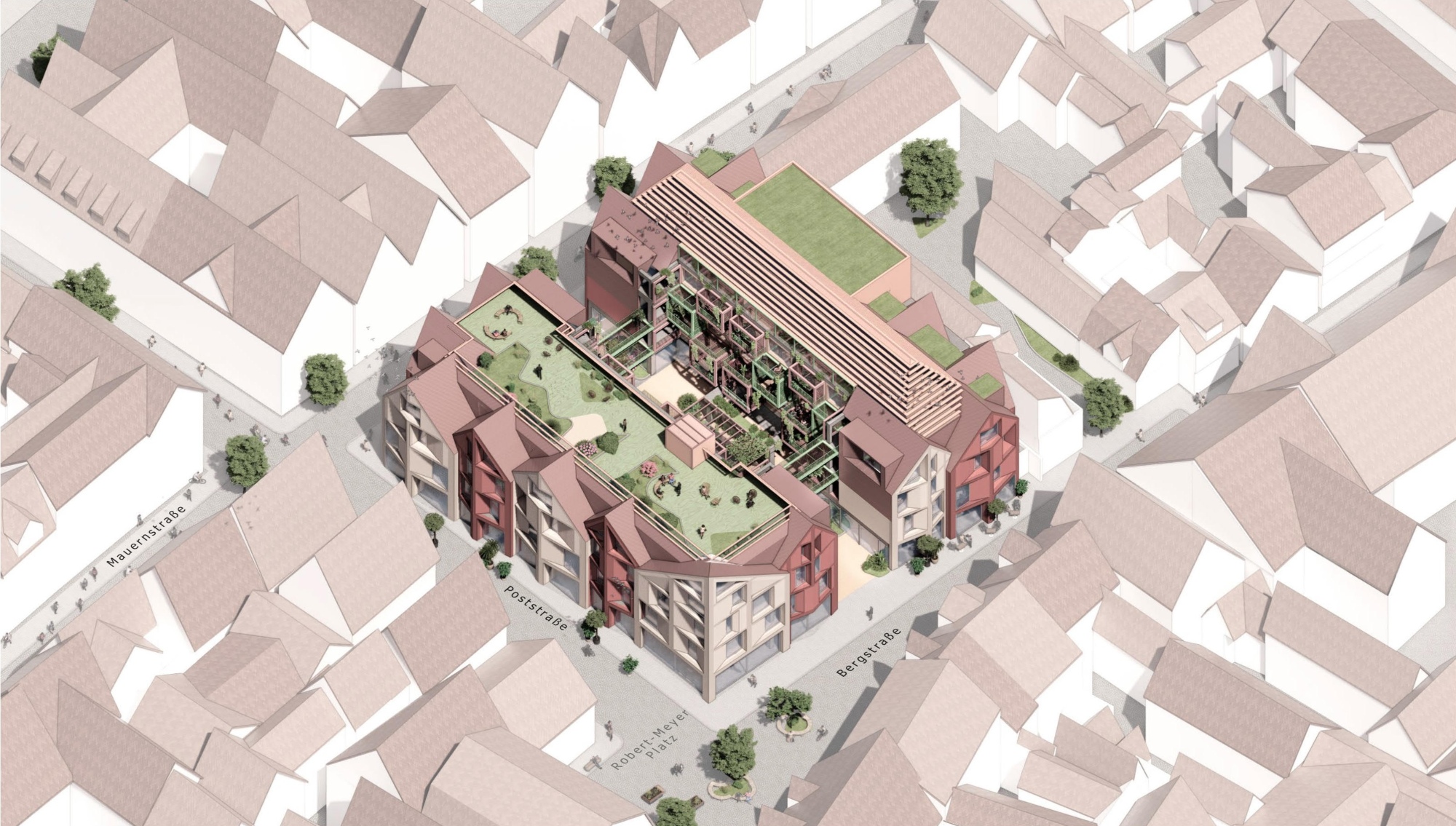
The building is to be redeveloped for two main reasons: 1. To preserve the “embodied energy” of the existing structure. 2. Because there is no longer any demand for a single-tenant department store.
The redevelopment must therefore anticipate flexible uses that strengthen the urban life of the old town and permanently restore the location as an anchor destination in downtown Celle.
The key data provides a solid foundation for an investable building: a plot size of approx. 2,905 sqm, 4 stories, a site area ratio (SAR) of nearly 1.0, and a floor area ratio (FAR) of 3.0, resulting in up to 8,800 sqm of gross floor area (GFA). The building height corresponds to the vertical geometry of the city center and should be maintained.
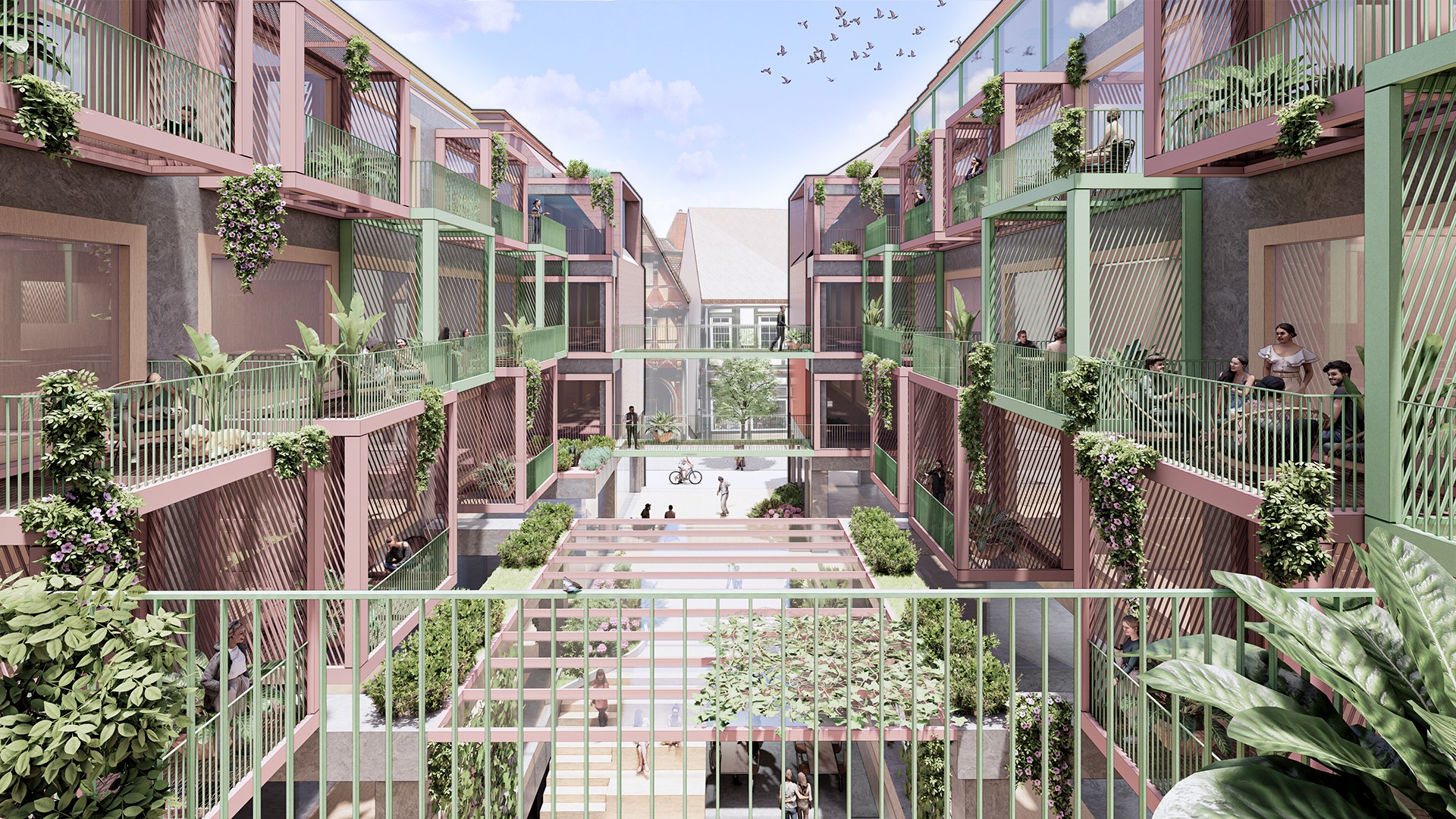
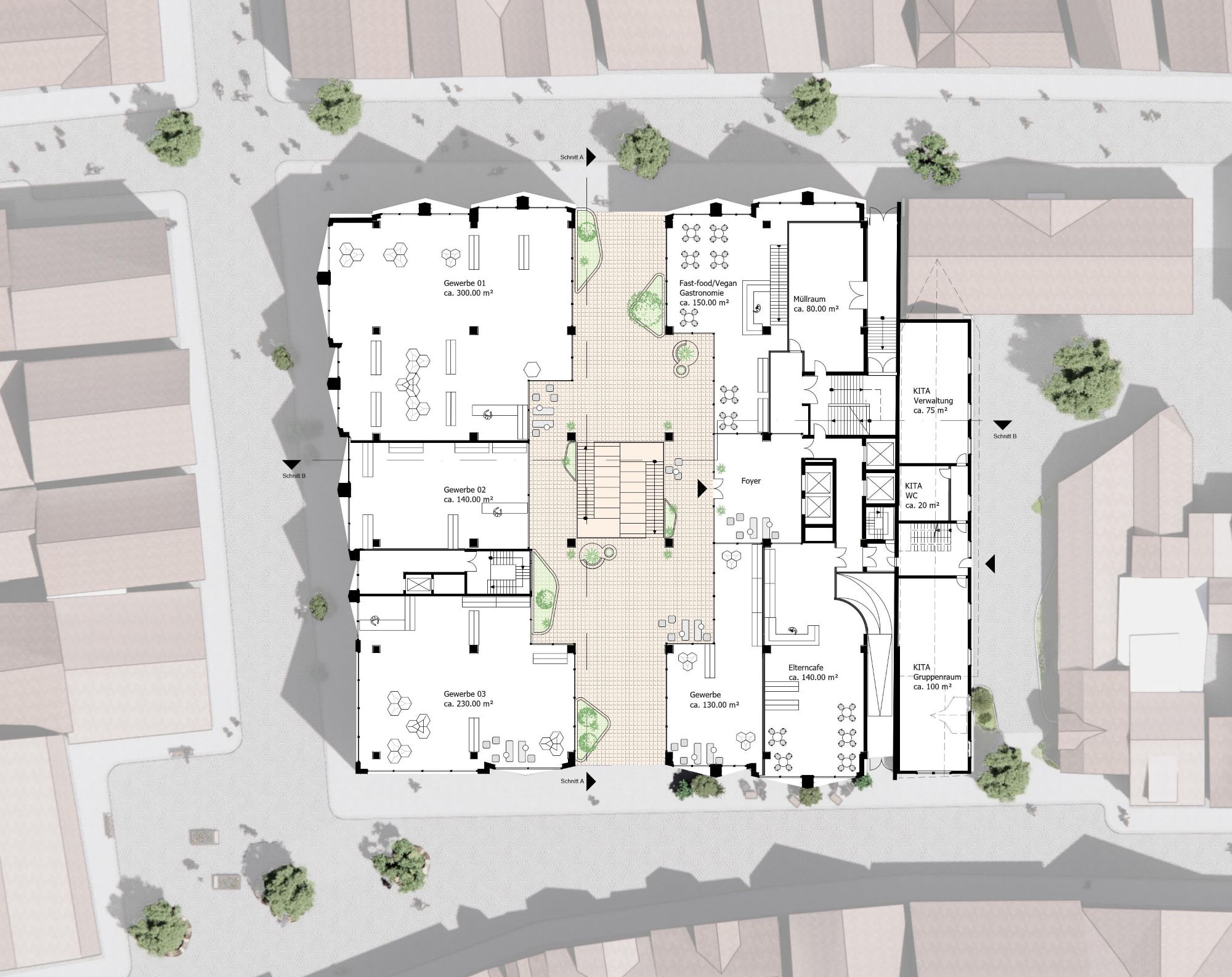
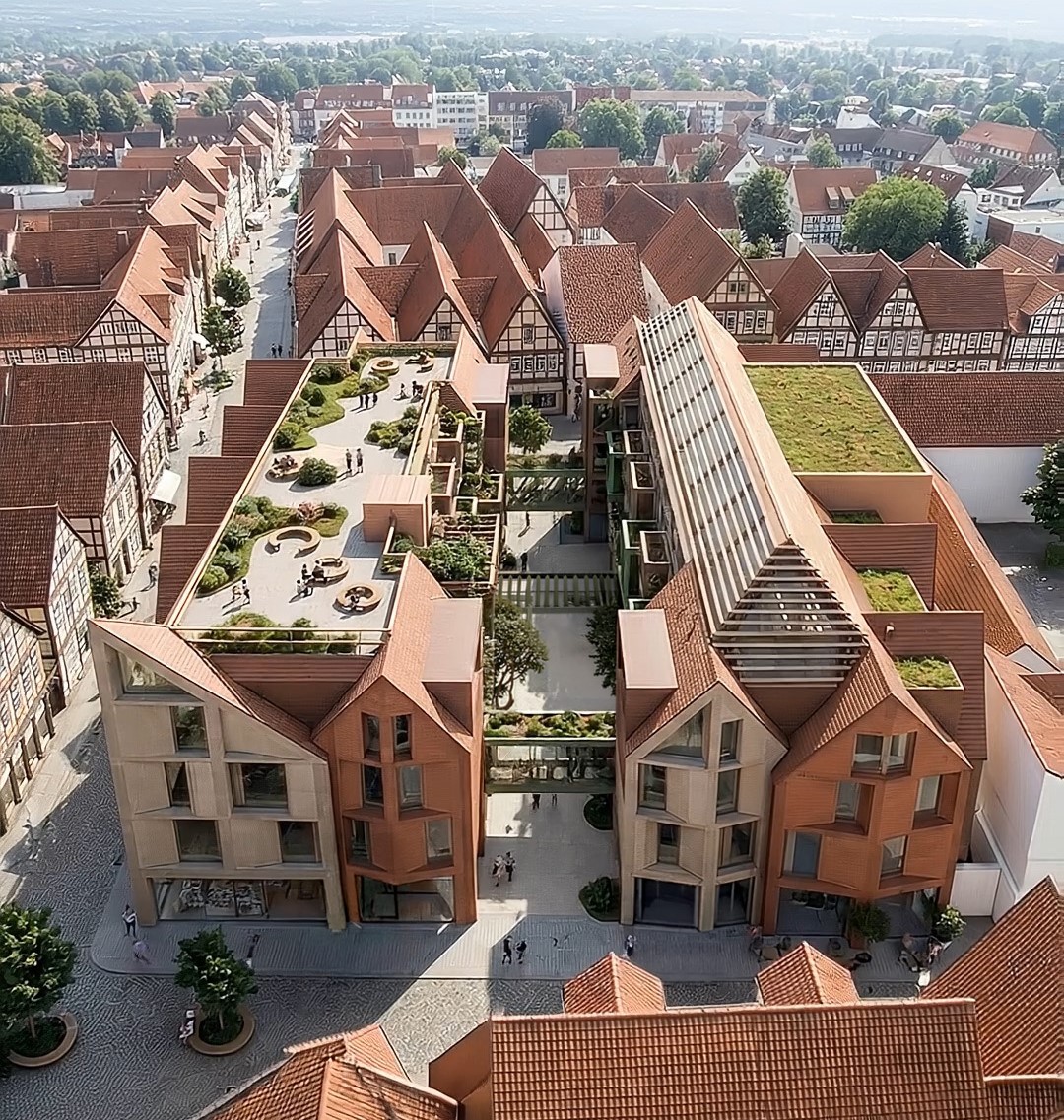
Initially, the building will be divided roughly down the middle. This introduces natural light into the interior zone and creates a pedestrian passage connecting Bergstraße to Mauernstraße. At a width of around 8 meters, it mirrors the historic alleys of Celle. This division marks the end of the closed building block. The new, green-infused pedestrian alley significantly enhances the quality of the public space surrounding Robert-Meyer-Platz.
This light-flooded incision enables daylight-reliant uses throughout the above-ground levels. While the department store used to be relevant to the urban landscape only from the outside, this new, additional interior exposure is the exact element that transforms the complex into an anchor hotspot seamlessly and empathetically connected to its surroundings.
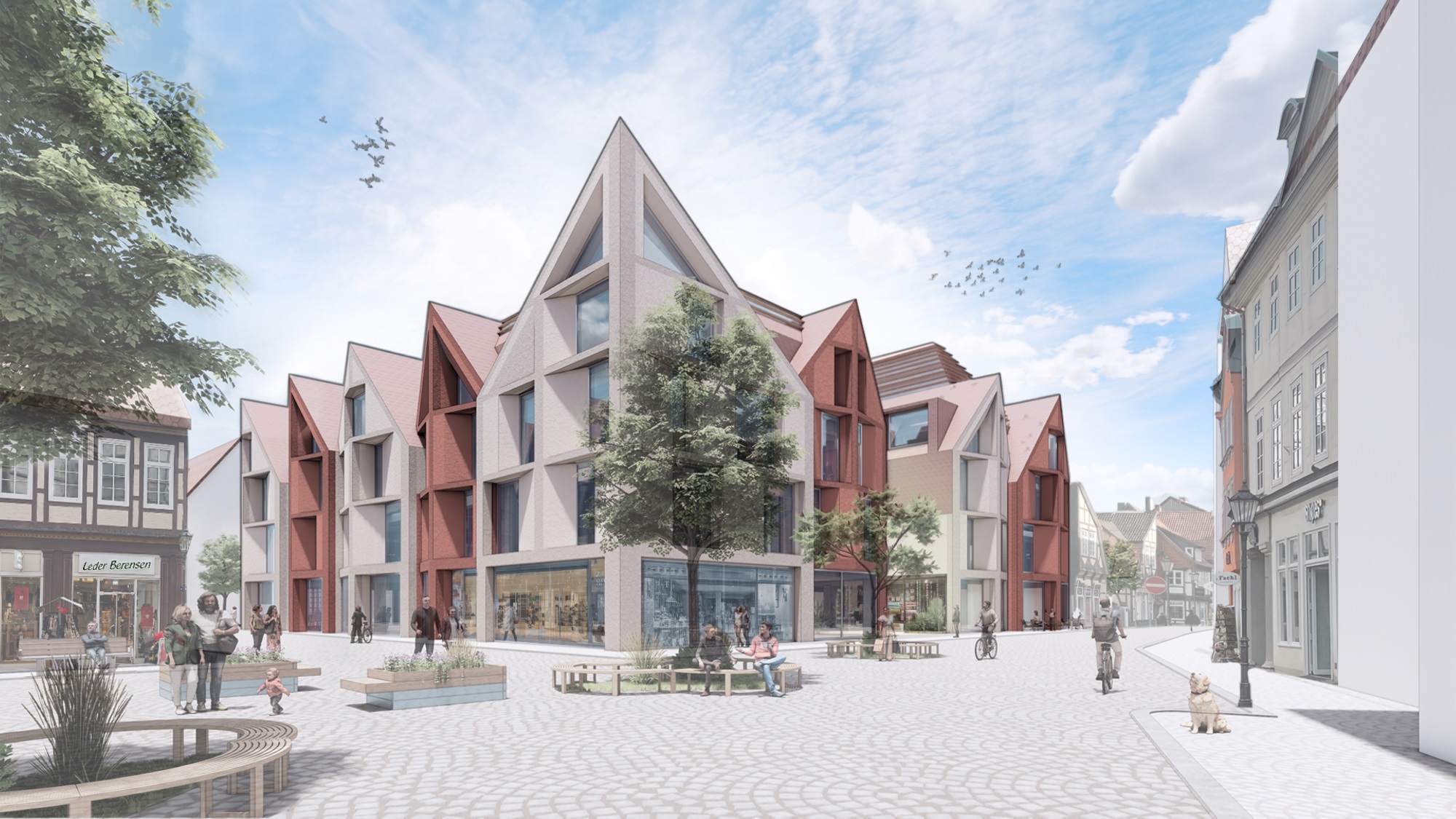
The loss of floor area will be compensated for on the east side by restoring the historical building line, which brings back the original urban frame at the intersection of Mauernstraße and Poststraße.
On the west side of the building, a rooftop terrace offers space for a wide variety of uses. Conceptually, this could include a community garden for students, relaxation areas, gathering spaces for small celebrations, or simply a place to enjoy the sunset with friends. On the opposite side, a two-story glass extension could be built, perhaps housing a museum with a café-bar and an additional terrace offering extraordinary views over downtown Celle. The shape of the roof creates highly attractive spaces.
Ample space is available on the ground, standard, and basement floors to accommodate all necessary functions and leasable areas. The standard upper floors could accommodate apartments in two different sizes, each accessible via its own separate core. Everything from student housing to temporary serviced apartments is conceivable.
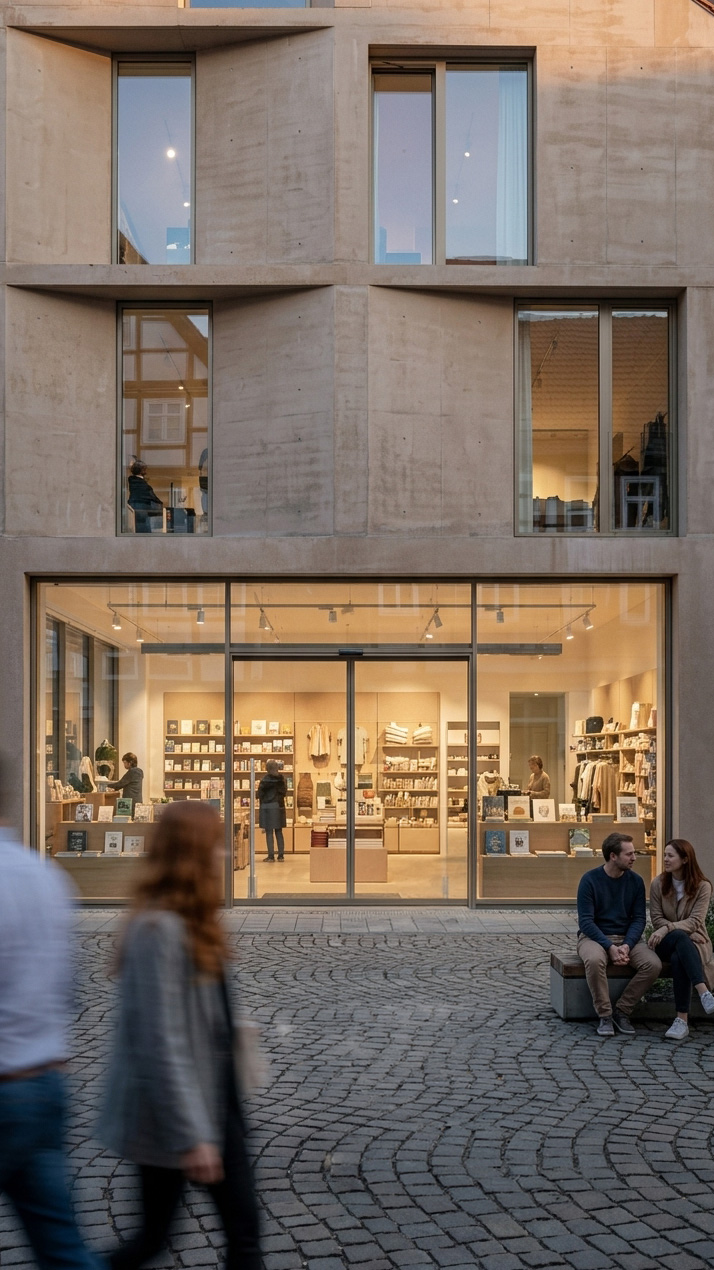
The ground floor allows for flexible uses, such as retail, gastronomy, a parents’ café, a daycare center, as well as community and relaxation spaces. No rigid commitments are required here prior to construction, ensuring the city center can remain vibrant at this location in the long term.
The basement accommodates additional functions, including a fitness room, a laundry room, bicycle parking, storage, and workspaces.
Project Gallery