Building as a Long-Term Social Process
by Manfred Wenzel
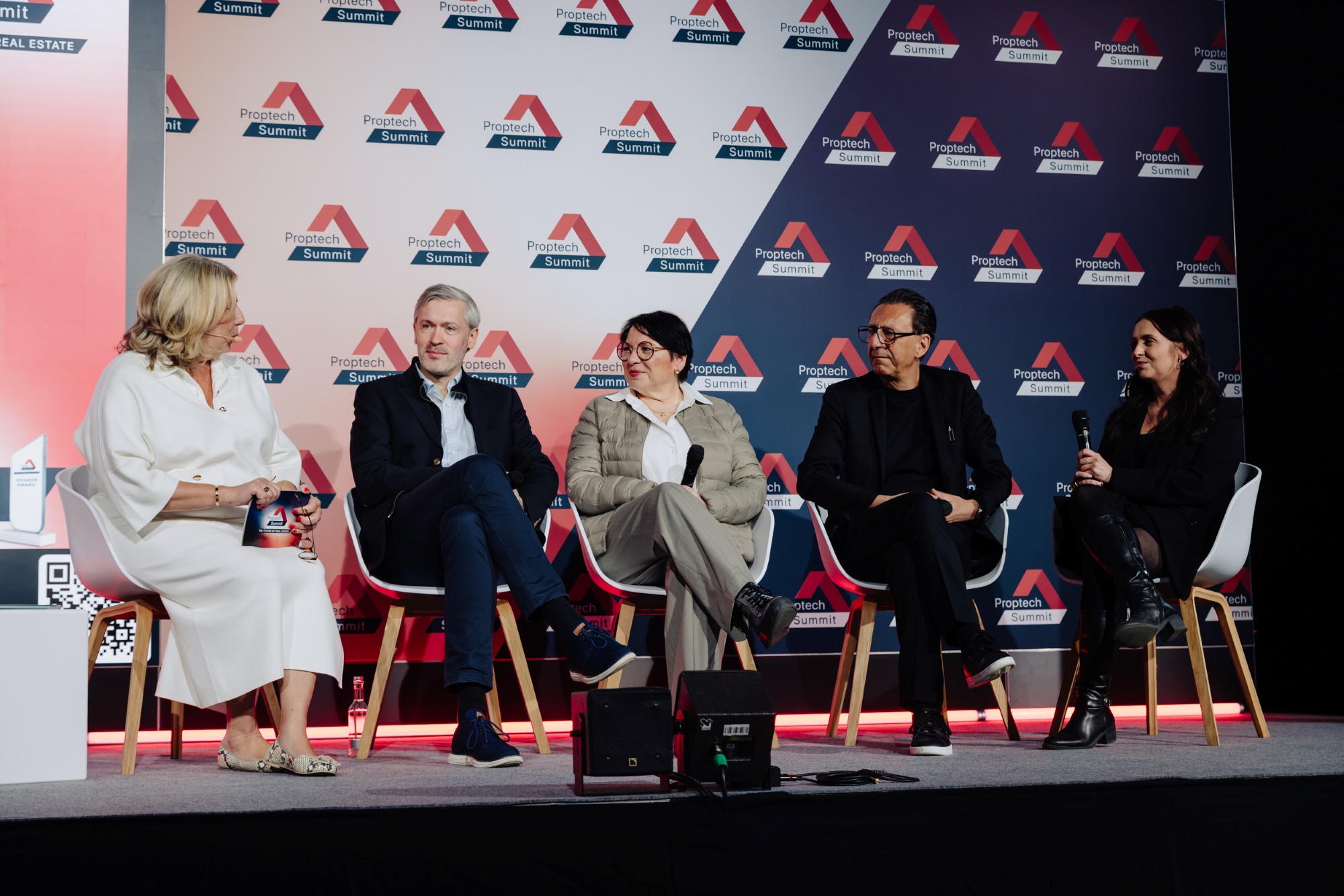
This article explores why banks, financial service providers, landowners, legislators, and municipal policymakers must rethink their approach together in order to achieve the best urban and economic outcomes for our cities in the coming decades. I first presented this article at Proptech 2026 in Hamburg, during a panel discussion on the topic “What do we do with unused property?”
1.
Since Vitruvius (The Ten Books on Architecture, written c. 30 BC), the three fundamental principles of good architecture have been:
- Firmitas (firmness/structural quality),
- Utilitas (utility/long-term usefulness),
- Venustas (the “Venus effect”—one looks at it and is captivated by beauty without knowing exactly why).
In ancient times, the primary goal for large structures was to build something that would last for many generations. They served to spread religions, organize imperial realms, and foster larger urban communities.
Even today, we often find a certain architectural “urge for prestige” in state and private representative buildings. Such “architecture of power” is largely of limited use to a city’s social life; from the standpoint of the city as a living space, it is a waste of urban resources.

2.
For millennia, architecture has been a shaping factor for human coexistence, also enabling the long-term accumulation of wealth. Private land ownership and buildings can be viewed as family foundations. For people, they form a material base and are usually their most valuable heirloom.
Generally, a building serves four forms of utility:
- a) Direct spatial utility of the building.
- b) Aesthetic and functional neighborhood relationships (where a house stands, there cannot be a street, a park, etc.).
- c) Role for the city (living, working, healing, teaching, etc.).
- d) Stability anchor for financial markets.
Thanks to modern financial markets, points (a) and (d) have become increasingly important over the past decades, while (b) and (c) have become less so.
Consequently, the physical substance is no longer as central to property valuation as it once was.Land value now has its own value, including for tax purposes, which can developindependently of the building—to the point where, in prime locations, the land can be far more valuable than the structures upon it.
3.
Why is this? Unlike buildings, land is value-stable because it is not subject to wear and tear. Furthermore, in modern money markets, real estate acts as a “stability anchor,” playing a role similar to gold.
The task of acting as material loan security increasingly puts pressure on municipal urban planning and expectations of architecture (see the FAZ review of Mike Bird’s ” The Land Trap” , “When Ownership Stands in the Way of Progress”).
This problem now even affects farmland, as excess liquidity is invested in agricultural soil solely for its abstract financial function, without the risks of an entrepreneurial investment.
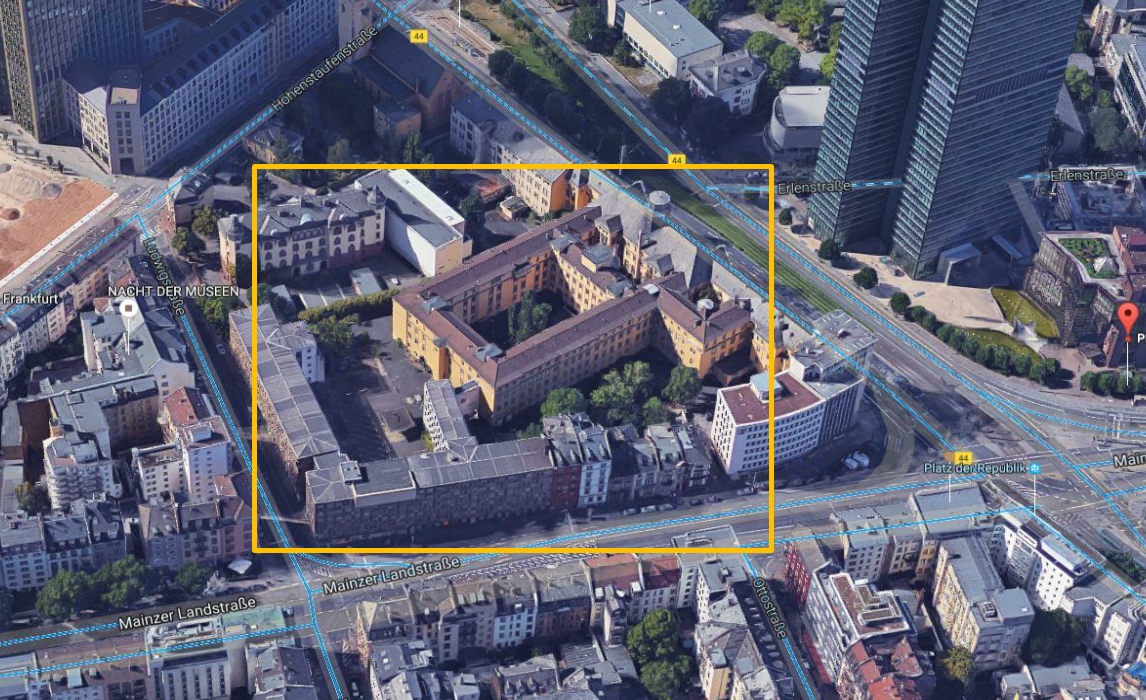
In extreme cases, land remains unused for decades. The parallels are gold or high-end art, bought to disappear into a safe, sometimes for decades.
4.
Since industrialization, real estate has transformed into tradable and divisible investment objects for shifting owners and investment funds. The invention of the safety elevator by Elisha Otis (1852) accelerated this change, as elevators enabled the vertical growth of cities. While cities previously grew only by expansion, rising demand has since increasingly concentrated in central downtown districts.
Cars, buses, and trains also created ever-larger catchment areas, which ultimately did not relieve demand in city centers, making super-dense building types the standard there.
5.
For architects, land value plays no role. Banks and investors, however, prefer to lend on land where demand appears to rise most stably—long since the case where the city is economically and socially most vibrant.
The consequence of the almost “automatic” value increases in prime locations was a decline in the importance of quality and design, while loan amounts were pushed ever higher. Today, it is no longer uncommon for such “architectural sins” to be technically or spatially obsolete and barely usable, even though they were built only a few decades ago. Especially in inner cities, there is a growing number of “distressed properties.”
Many of today’s “building products” are still optimized primarily for medium-term cycles. While there are always many exemplary counter-examples, all stakeholders should become more aware of the dangers of “bad architecture.”
6.
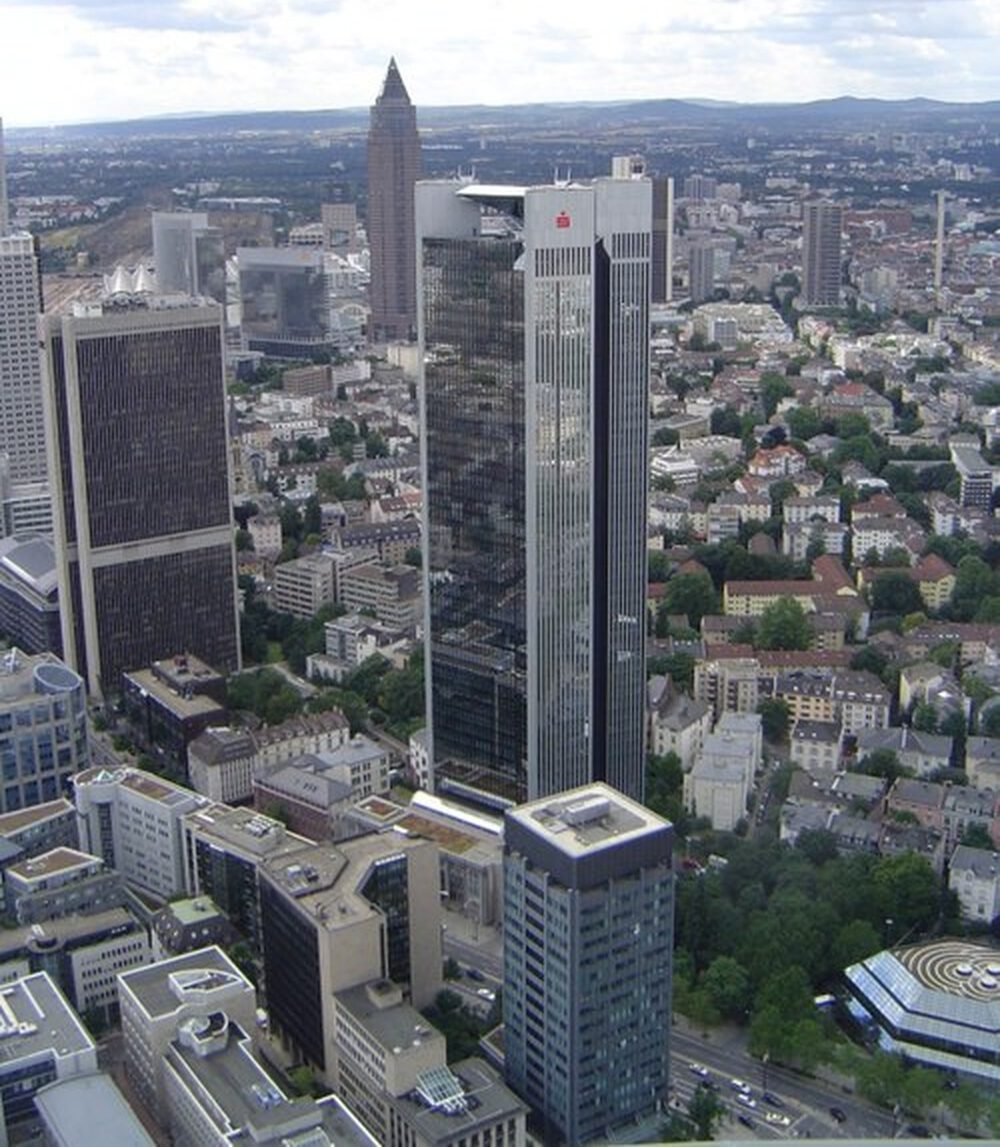
In Germany, the real estate sector accounts for about 20% of economic output. Investments are mostly made with borrowed capital—i.e., leveraged. The financialization of building diminishes the ambitions that have historically shaped architecture: sustainability, durability, and social responsibility.
Current distressed properties serve as a reminder that real estate crises can also arise from an erosion of utility, overly optimistic financing models, or the postponement of maintenance. This is not new, if one thinks of old factory buildings or castles. What is new is the frequent occurrence of this phenomenon in a city’s best locations.
7.
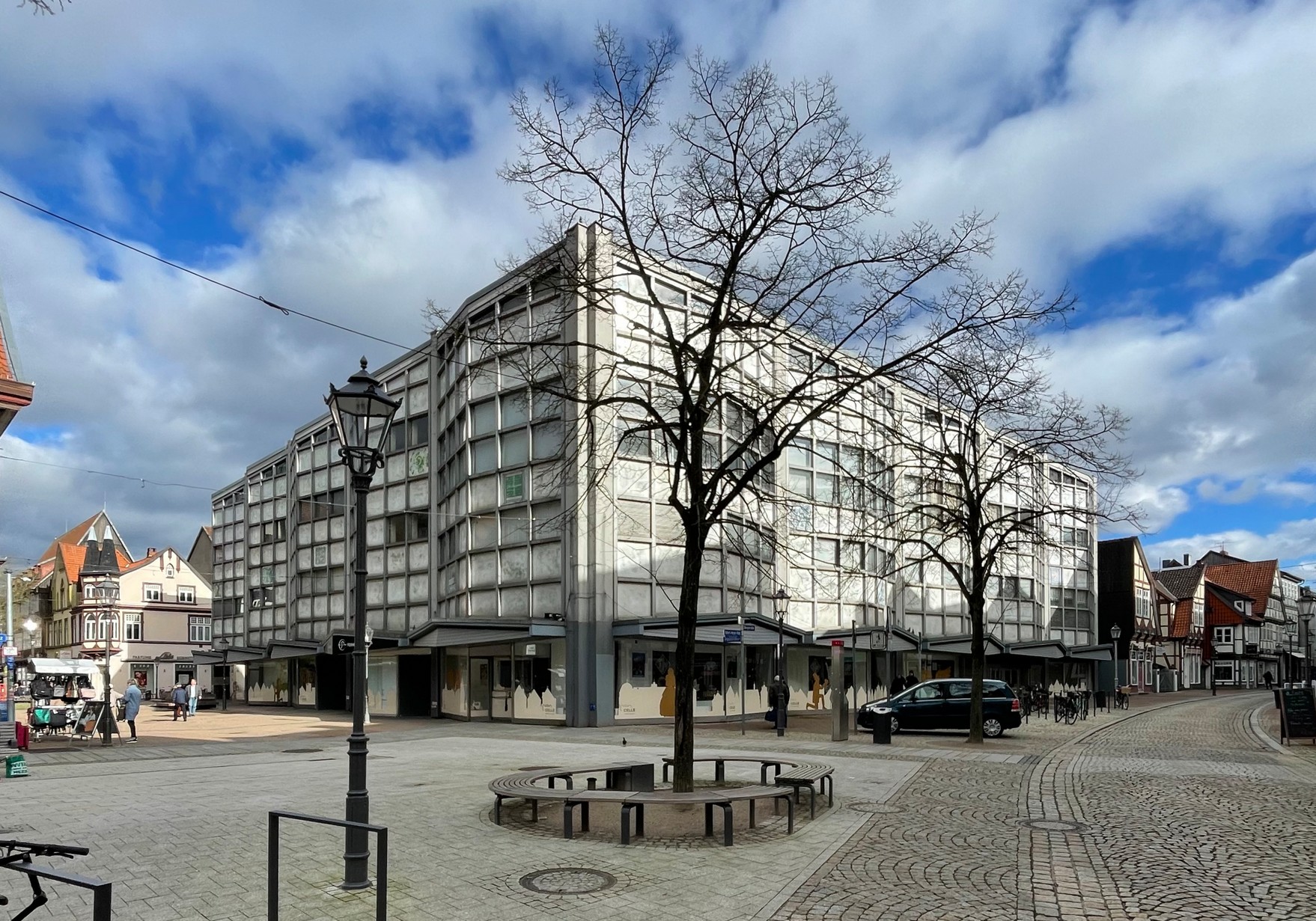
Department store real estate is in a “crisis of meaning,” having transformed from safe to risky assets.
The repurposing of this building type, which in many places enhanced surrounding locations and ensured lively downtowns, is a massive problem. In some cases, the building blocks have stood empty for years, partly because the land is valued and mortgaged at peak levels. A cascade of land devaluations in inner cities would almost be a systemic shock.
On the other hand, conversion or new construction costs are only worthwhile if the corresponding returns can be realized. The main question from the financiers’ perspective is: Can a centrality and strength of demand be maintained for these locations that attracts functions and people from across the city?
The retail sector has long said it can only survive in the inner city with lower rents. What is needed now are transformation concepts—a new life plan for Germany’s post-war cities.
8.
In his book ” Together” (2018), sociologist Richard Sennett draws attention to “repair” as a fundamental element of the human cultural process. According to him, the continuum of repairing is part of the foundation of coexistence and, therefore, the basis for a city life that is constantly reorganizing itself.
Today, we see that the livability of a city is preserved not just through individual new buildings, but at least as much through successful adjustments and maintenance. Repair processes protect communities, improve urban culture, and deepen urban coexistence; one can understand all forms of maintaining social utility—renovation, extensions, conversions, vertical additions, or repurposing—as an urban repair process.
9.
Today, only 30 percent of building investments in Germany go to new construction, while 70 percent go to existing stock. Nevertheless, a planning deficit is often observed: buildings and neighborhoods are often not thought of as open systems, but as isolated projects for a limited realization period.
Such problems also arise because the design options of municipalities are more than scarce. They are struggling with a multiplication of urgencies:
- Lack of housing for middle- and low-income earners
- Changes in demand in office and commercial real estate markets
- Traffic conflicts (street widths, parking, bike paths)
- Efficiency of public transport
- Climate adaptation
- Aging infrastructure
- Lack of social mixing (ghettoization)
- Tasks regarding daycare, schools, parks, etc.
- Growing budget deficits, partly due to increased social spending.
One would wish for construction activity everywhere, including more social housing and public buildings. But cities cannot reorganize and “repair” themselves as quickly as they need to.
10.
Architecture is planned as a financial product, “opportunistically” for the highest possible annual returns. It is not to be criticized that they must function mathematically. Investors must think within the field of tension between predictable returns, political requirements, tenant demand, and loan periods—or invest in other assets or countries.
The financial benefit of improving “soft” values such as social structure, urban identity, or ecology is hardly calculable and not fundable, especially not over long periods. The consequences include:
- Disproportionately rising housing costs,
- Aesthetic monotony,
- Shortened usage cycles,
- Increasing interchangeability of the built environment.
This shows: Municipalities have lost some of their control over the design of the city. Some projects prove to be economically and functionally unsustainable or inappropriate after a short time.
However, current developments are not a law of nature. They are the result of framework conditions, financial market narratives, and municipal decisions. Future development can therefore be steered back toward achieving the best possible urban and economic outcomes.
11.
Politics must act politically and develop new ideas and strategies for every historical phase to shape and secure the conditions for diverse, responsible, and sufficient building.
The topics now at the forefront are known but are only hesitatingly receiving the necessary priority:
- We need faster decisions, first and foremost in the “repair” of building laws, institutions, and municipal building codes.
- Land values must be re-regulated so that urban “prime pieces” in city centers can be valued more as “income assets” rather than “value assets.”
- Cities should more quickly make land reserves accessible, even for small-scale engagements, to enable a vibrant urban diversity.
- The work of building authorities and approval procedures must be simplified and accelerated.
- Building codes must be critically reviewed, reduced, and made more flexible at the state and federal levels. Contradictions between various sets of requirements must be eliminated; otherwise, the developer’s choice of which guideline they wish to follow could simply apply.
- The state should expand the scope for renovation ideas, conversions, additions, and repurposing.
The beneficiaries of such measures would be all city residents, the municipalities themselves, the construction industry, and the urban quality of life.
12.
A look at history shows that times were good for building when they invented and enabled new, unconventional models. Two ideas found in the present and history, but currently not common in Germany:
- Taking up the “terrain society” model of the late 19th century: They developed large areas, parceled them oand enabled a multitude of individual building projects there. This resulted in dense, diverse, and still-functioning urban structures with a multitude of owners, different financing, and all the services a city needs nearby.
- Private investors could acquire only the usage rights for a plot of land in exchange for a one-time payment. This would reduce total investment costs, curbmere land speculation, and impose a negative return on idle land.
In general, architecture should once again be understood by all involved as a social task and be more strongly oriented toward the principles of durability, reparability, and appropriateness.
The built environment shapes life in a city for decades and thus also the economic success of a city. The question of how we build is therefore always a question of how we live and where we want to develop.
If we fail to rebalance economy and sustainability, efficiency and quality, market and common good, society in Germany could continue to lose one of its most important factors for general life satisfaction.

Mit dem Laden des Videos akzeptieren Sie die Datenschutzerklärung von YouTube.
Mehr erfahren